
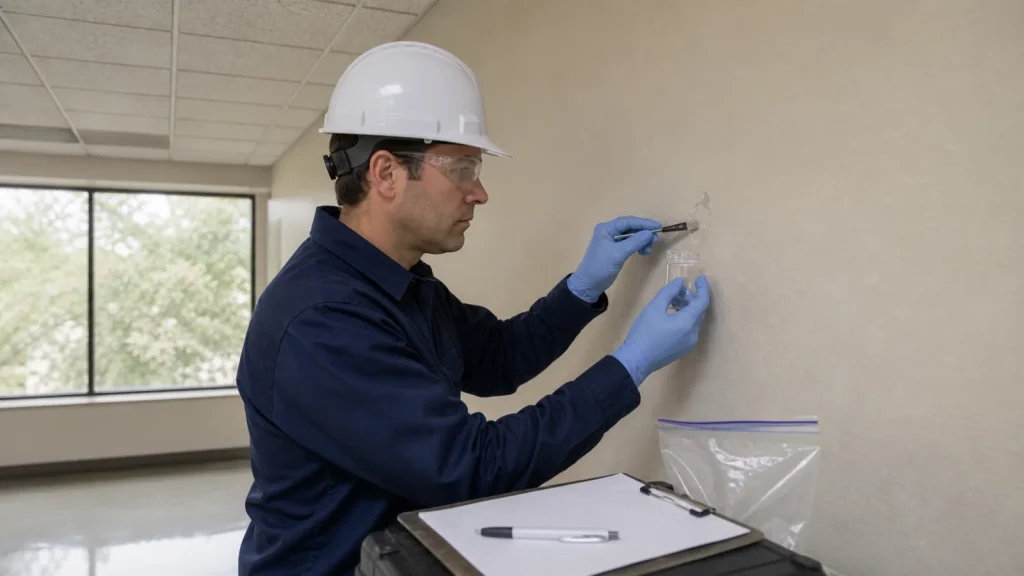
A useful asbestos inspection begins with the work that is actually planned. The inspector reviews the property, identifies suspect materials that could be disturbed, and documents their locations, approximate quantities, and observed condition. The goal is not simply to collect samples; it is to produce information the owner and project team can use.
Before the site visit
The consultant will usually ask about the building, the proposed renovation or demolition, target dates, occupancy, and any prior asbestos records. Drawings and photographs can help define the affected areas, but they do not replace field observations. Clear access to rooms, mechanical spaces, ceilings, and other relevant areas makes the inspection more efficient and reduces the chance that an important area will remain inaccessible.
Owners should also identify operational restrictions in advance. Schools, offices, medical spaces, apartments, and occupied homes may require special scheduling, escorts, or coordination so the inspector can work without disrupting normal activities.
The visual review
During the walk-through, the inspector looks for suspect materials and groups materials that appear uniform in color, texture, application, and installation history. Common examples can include floor tile and adhesive, textured coatings, thermal-system insulation, ceiling materials, wall systems, roofing products, and other components that may be affected by the planned work.
Appearance alone cannot confirm whether a material contains asbestos. The EPA recommends sampling by a properly trained asbestos professional when suspect material is damaged or will be disturbed by renovation. The project scope and applicable rules determine which materials and areas must be evaluated.
Representative sampling
The inspector selects representative sample locations for each relevant material group and uses controlled methods intended to limit disturbance. Sample locations are recorded so the laboratory result can be connected to the correct room, material, and planned activity. The number of samples is not based only on building size; material type, observed differences, installation patterns, and regulatory requirements also affect the sampling strategy.
A small mark may remain where a sample was collected. When appropriate, the inspector can discuss sample locations with the owner before beginning, especially in occupied or highly visible areas. Sampling is an investigative activity and is not the same as asbestos removal or repair.
Laboratory analysis and documentation
Samples are sealed, labeled, and documented for delivery to a qualified laboratory. Chain-of-custody information connects the field sample to the analytical result. Turnaround time should be discussed before the inspection if the project schedule is tight, because faster laboratory service may affect cost and report timing.
What should the survey report include?
The final report should connect field observations and laboratory results to practical decisions. A typical report may include:
- The inspection date, building areas, and agreed scope.
- Sampled material descriptions and location records.
- Laboratory analytical results.
- Approximate quantities and observed material condition.
- Limitations, including inaccessible or excluded areas.
- Recommendations relevant to the proposed work.
For demolitions covered by the asbestos NESHAP, the EPA explains that a thorough inspection must occur before work begins. Texas public-building projects may also require licensed professionals and additional documentation, so the inspection scope should be confirmed before the field visit.
After the inspection
Owners should provide the completed report to the parties who will design, estimate, or perform the affected work. If plans change, the survey should be reviewed again. Materials outside the original scope or concealed behind inaccessible assemblies may require additional inspection before they are disturbed.
Conclusion
A professional inspection replaces assumptions with documented information. Preparing a clear scope, allowing access, and giving the consultant adequate schedule information will produce a report that is more useful for planning, pricing, and compliance decisions.