
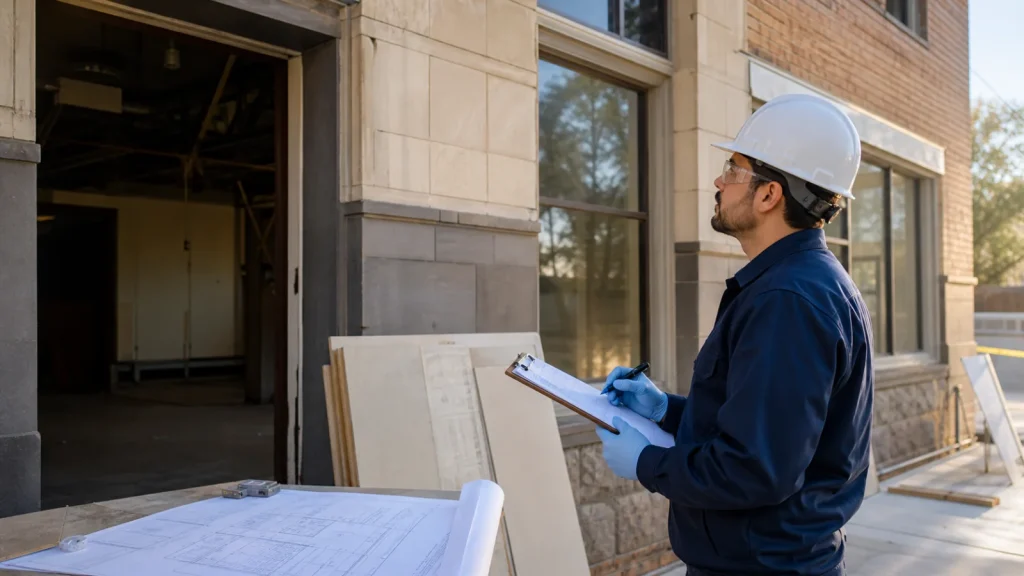
An asbestos survey belongs near the beginning of project planning, before demolition, selective removal, or renovation work disturbs suspect building materials. Early scheduling gives the owner, designer, and contractor time to understand what is present, define the affected area, and account for required controls in the budget and schedule.
Plan before the work is priced
The best time to request a survey is when the work area is known but before the construction scope is finalized. Waiting until a contractor is ready to mobilize can create avoidable delays if sampling identifies asbestos-containing material that must be managed, removed, or incorporated into project documents.
A survey can also improve bidding. When contractors receive clear material locations, quantities, and analytical results, they can price the intended work with fewer assumptions. The owner can then compare proposals against the same information instead of addressing an unexpected condition after work begins.
Which projects need early attention?
The answer depends on the building and the planned disturbance. The Texas Department of State Health Services asbestos FAQs explain that asbestos requirements apply before many renovation and demolition projects and that a licensed asbestos inspector is required to conduct a survey in a Texas public building. For projects covered by the federal asbestos NESHAP, the EPA describes a thorough inspection before renovation or demolition begins.
Coverage is not determined by building age alone. Building use, ownership, the number of residential units, the type of work, and the materials being disturbed can all matter. A newer finish may also cover an older material, so a visual walk-through or construction date should not be treated as a substitute for a project-specific review.
Build a realistic project timeline
- Define the work area. Identify the rooms, systems, assemblies, and exterior components that may be cut, removed, sanded, drilled, or demolished.
- Complete the field survey and laboratory analysis. Allow time for access coordination, representative sampling, laboratory turnaround, and report preparation.
- Review the results. Positive findings may affect design, contractor selection, sequencing, occupant protection, and disposal planning.
- Confirm notification and abatement requirements. When notification is required, timing must be included in the schedule. Texas DSHS states that applicable initial abatement or demolition notifications generally must be submitted at least 10 working days before the regulated activity begins.
Information to prepare
- Building address, current use, and approximate construction and renovation dates.
- Drawings or a clear description of the planned work area.
- The expected bidding, renovation, or demolition dates.
- Prior asbestos surveys, abatement records, or management plans.
- Access requirements, occupied-area constraints, and known concealed spaces.
What happens after the report?
A useful report should help the project team decide what happens next. Material that will remain undisturbed may require a different response than material directly within the renovation scope. Depending on the findings, the next step may be avoidance, management in place, abatement design, contractor pricing, notification, air monitoring, or additional investigation of areas that were inaccessible during the first visit.
Conclusion
Do not use the construction start date as the survey deadline. Schedule the survey early enough for the results to influence design, budget, and sequencing. Because requirements vary by property and project type, Environmental IQ reviews the planned work before recommending the appropriate inspection and documentation path.